Plastic Bottle Boat


Just ran across this project from Thailand by the ISARA Foundation, take note of the material the boat is being built out of.
73, Al
Just ran across this project from Thailand by the ISARA Foundation, take note of the material the boat is being built out of.
73, Al
from QST January 2011 p. 128
What is your comfortable CW receiving speed?
None – I don’t operate CW – 27%
1 to 5 wpm – 11%
6 to 10 wpm – 15%
11 to 20 wpm – 25%
21 to 25 wpm – 14%
26 to 30 wpm – 5%
31 wpm or highr – 3%
Interesting, eh? Not as many higher speed operators as I thought there might be.
73 , Al

Dave Marling VE1VQ has an interesting article online about balanced feed line. Looks fairly easy to make using old plastic clothes hangers. Thanks Dave for posting this interesting article.
73, Al
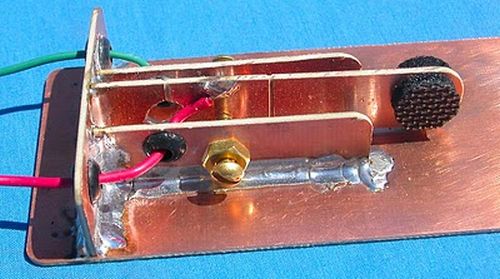
If you are interested in building a trail-friendly single-lever CW paddle, check out the November 2010 article in Worldradio Online magazine, or go to this link for an online article by KI6SN.
73, Al


This is a picture of the antennas at Radio Canada International at Sackville, NB, Canada, located just east of Sackville on the Trans Canada Highway. Picture was taken through the vehicle window on our return from Halifax this past summer.
73, Al

One of the simplest antennas you can use to get on the air with is the dipole. Here is an article which shows you the simplicity of the antenna and outlines how you can put one up and use it on any frequency.
73, Al

One of the major resources on the web for the EFHW antenna is AA5TB’s site. I have included many links to articles on his site but also have some others. If you are interested in the EFHW antenna, check them out.
73, Al
 Bill N4QA uses the Gutter And DownSpout on his house as an Antenna, with a tuner mounted at ground level with coax entering the house at the base of the downspout.
 73, Al

Jake, N0LX, has some nice antennas on display at his site. One of the more interesting ideas he writes about on his site is the idea of using a spiral of wire or ribbon as a counterpoise to a vertical. No room for radials, then perhaps this will work for you. Check out his article on a spiral counterpoise for a vertical antenna.
73, Al

Here is a link to a homebrew 20M vertical by W4INF, easy enough that an 8 year old can do it. Vertical wire and radials are all 16.5′ long.
Note: the link to the original article is no longer available, this is a link to a copy of the original web page that I created.
73, Al

VE3EIM Bob (now VE6RI) gave me this just before he moved from our area to Alberta. It has proven to be a good way to get antenna wires up into a tree.
73, Al
All of these spots are southwest of St Thomas, Ontario, Canada, some quite near the Lake Erie shoreline. I start my trip to the sites from the corner of Highway 3 and Highway 4 west of St Thomas. I include a map showing how to get to each site and pictures from that site. Enjoy.
 One nice Sunday afternoon, I went out for a drive looking for portable operating sites close to Lake Erie, initially I headed west out of St Thomas. In the end, I found 4 of them. The first site is found at the end of Iona Road right down close to Lake Erie. From the starting point, proceed west on Hwy #3 to Iona Station, then turn left and go towards the lake.


 From the Iona Road site, go north on Iona Road, and turn left on Thomas Line, to County Road 16, then on to Currie Road, south to Lakeview and turn left on Erie Road. Drive right down to the lake, just before you get there, you will notice a laneway leading into a field on your left with tall tress for antenna supports to operate radio in. A great sheltered site not very far from Lake Erie.


 From the Erie Road site, go north on Erie Road, and turn left onto Lakeview Line, then right onto Coyne Road, go north to Hwy #3, turn left and proceed to the roadside park on your left. This is a neat little park and rest area, with portable toilets, and very many trees for shade on the side of the highway. Lots of trees for long antennas.


 From the Hwy #3 roadside park, proceed west on Hwy #3 to McKillop Road, turn left and go towards the lake. You will approach the EM Warwick Conservation Area, parking is straight ahead. An ideal operating position is a few meters away, walk towards the lake down the lane, past the picnic shelter and you will see an observation tower. This provides a nice operating position in good weather, in poor weather, the picnic shelter you just passed will provide shelter from the weather. Again, lots of trees for antenna supports.


73, Al